Creating a Restaurant Schedule: Tips, Shift Models and Common Mistakes
Peak times, Minijobbers, split shifts — how to plan your restaurant schedule efficiently and avoid the most common mistakes.
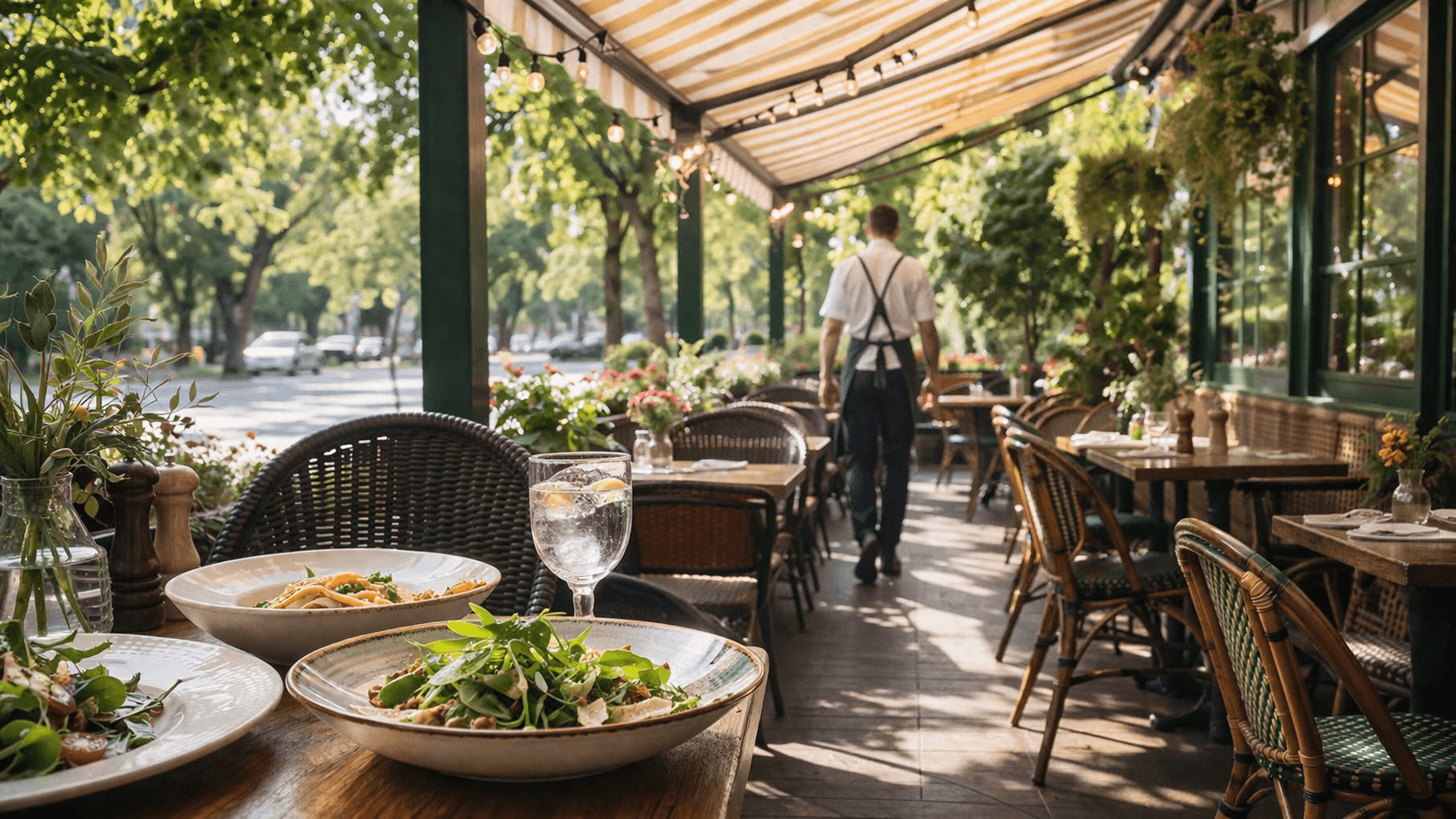
Restaurant scheduling is not an office problem. It is about peak times that change every day, about Minijobbers with a limited hours budget, about kitchen, service and bar with completely different requirements — and about staff who would all most prefer to have the weekend off at the same time.
This article shows what really matters when scheduling in hospitality — with concrete tips, common mistakes and the most important rules you should know.
What makes restaurant scheduling unique
Compared with other industries, hospitality has a number of peculiarities that make staff planning particularly demanding:
Peaks and lulls
Rush at lunch and in the evening, little in between. Staffing has to adapt to guest volume — not the other way around.
High share of Minijobbers
Many businesses work with a mix of permanent staff and Minijobbers. Keeping an eye on the earnings thresholds is an ongoing task.
Weekend and holiday work
The main working hours fall on Saturday, Sunday and public holidays — exactly when everyone wants time off.
High turnover
Staff changes are above average in hospitality. New employees need to be slotted into the schedule quickly.
Short-notice changes
Sick notes, unexpected reservations, events — flexibility is essential for survival.
Different areas
Kitchen, service, bar, dishwashing — each area has its own staffing requirements and often its own team.
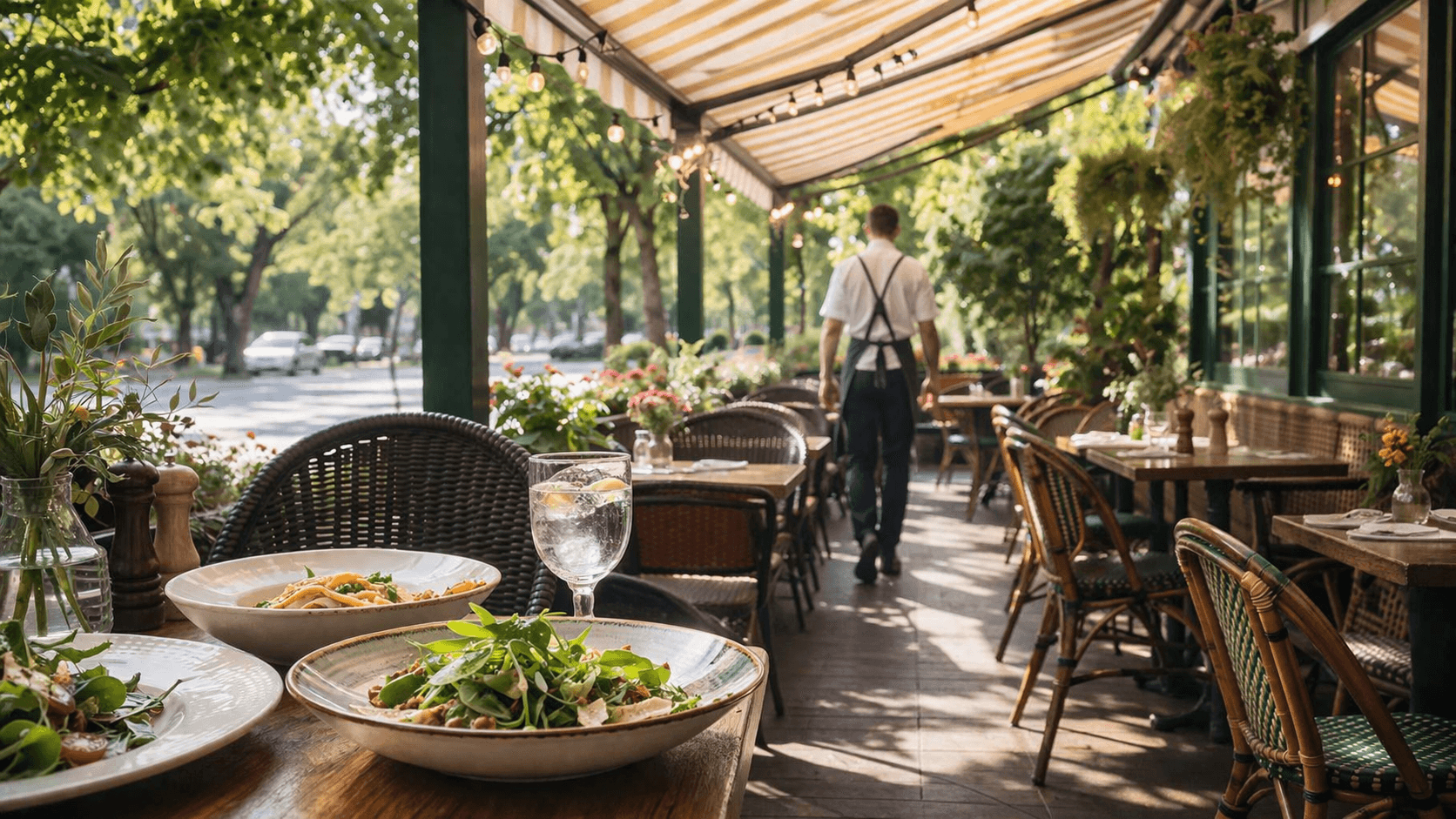
Common shift models in hospitality
Depending on the type of business and opening hours, various shift models have become established:
| Model | Typical hours | Suitable for |
|---|---|---|
| Continuous shift | e.g. 10:00–18:00 or 16:00–24:00 | Cafés, bars, snack bars |
| Split shift | e.g. 11:00–14:30 + 18:00–23:00 | Restaurants with lunch and dinner business |
| Early shift / late shift | Early: 06:00–14:00 · Late: 14:00–22:00 | Hotels, canteens, large-scale kitchens |
| Flexible deployment | As needed, e.g. Friday–Sunday only | Minijobbers, temporary help, seasonal staff |
Practical tip
Forward rotation (early → late → off) has proven to be more employee-friendly in practice than backward rotation. This is because the body adapts more easily to later bedtimes than to earlier ones.
Rest periods in hospitality: shortened rule possible
The German Working Hours Act (ArbZG) generally requires an uninterrupted rest period of at least 11 hours between two working days. For restaurants and accommodation businesses, the law provides the option to shorten this rest period to 10 hours under certain conditions.
Condition for the reduction
Under the law, shortening to 10 hours requires that it be compensated within a calendar month or four weeks by extending another rest period to at least 12 hours. Without compensation, the reduction is not permitted. When in doubt, the specific applicability should be reviewed on a case-by-case basis.
In practice this means: if an employee works until 11:00 p.m. on Friday, under certain conditions they could be scheduled as early as 9:00 a.m. on Saturday (10h rest period) — provided the compensation takes place in the same month. Without the hospitality exception, the earliest possible time would be 10:00 a.m. (11h).
Scheduling Minijobbers in the restaurant roster
Minijobbers are indispensable in hospitality — as weekend help, as reinforcement at events or as a regular part-time worker. There are a few points to keep in mind when scheduling:
- The monthly earnings threshold is EUR 603 in 2026 (as of April 2026) (at a minimum wage of €13.90/h, this corresponds to roughly 43 hours/month). More on this in our article Minijob 2026: How many hours?
- For Minijobbers in hospitality, the Minimum Wage Act provides for special record-keeping obligations. The start, end and duration of working time should be documented promptly.
- Occasionally exceeding the earnings threshold is possible under certain conditions (e.g. for short-term sickness cover).
Tip: keep an eye on the thresholds
Anyone employing several Minijobbers quickly loses track of the individual hours budgets. Digital scheduling with threshold alerts can help to spot overruns early.
Split shifts: lunch and dinner
In many restaurants with lunch and dinner business, split shifts are standard: the employee works, for example, from 11:00 a.m. to 2:30 p.m., then has several hours off and comes back for the evening shift from 6:00 p.m. to 11:00 p.m.
What to watch out for with split shifts:
- The break in between usually does not count as working time — working time is calculated from the hours actually worked (here: 3.5h + 5h = 8.5h)
- The rest period is calculated from the end of the last shift to the start of the next. With a shift ending at 11:00 p.m. and starting the next day at 11:00 a.m., that would be 12 hours — fine.
- Break rules apply to the total working time of the day. For 8.5 hours of work, the German Working Hours Act (ArbZG) provides for at least 30 minutes of break.
Make restaurant scheduling digital
Shiftdesk supports businesses with shift work in their scheduling. Try it free for 14 days.
7 tips for the restaurant schedule
Use the staffing requirements calculator for shift coverage to estimate staffing for your opening hours. Calculate kitchen, service and bar separately where their coverage differs, and account for peak periods in your assumptions.
Separate core staffing and flex pool
Define a fixed core staffing per area (kitchen, service, bar) and a flexible pool of temporary help and Minijobbers for peak times.
Recognize peak-time patterns
Analyze your reservations and revenue data by day of the week and time of day. Plan staffing based on real data, not on gut feeling.
Use weekly templates
Create templates for typical weeks (normal week, event week, holiday week) and copy them with a single click. This saves an enormous amount of planning time.
Collect availability digitally
Have employees enter their availability in the system in advance. This reduces queries and after-the-fact swap requests.
Ensure weekend fairness
Distribute weekend and holiday shifts fairly. A transparent rotation system helps to avoid conflicts.
Publish the schedule early
The earlier the schedule is set, the fewer conflicts. Target: at least one week, ideally two weeks in advance.
Use open shifts
Publish unfilled shifts as open shifts so employees can assign themselves. This fosters personal responsibility.

The 5 most common scheduling mistakes in hospitality
Scheduling via WhatsApp group
Shifts are distributed via chat, changes get lost, and by Friday no one knows who is working on Saturday. No traceable schedule.
Overlooking Minijob thresholds
Temporary staff accumulate more hours than planned through extra shifts. The earnings threshold is exceeded — with consequences for social security contributions.
Ignoring rest periods on a late-to-early switch
Late shift until 11:30 p.m., early shift the next day from 8:00 a.m. — even with the hospitality exception, that is only 8.5 hours and therefore too little.
No minimum staffing defined
There is no fixed benchmark per area. When someone is out, people improvise instead of plan — which costs quality and nerves.
Overtime not documented
Overtime is not recorded and working-time accounts are missing. When it comes to payroll or a dispute, the evidence is lacking.
Restaurant scheduling with Shiftdesk
Shiftdesk for restaurants is built for businesses with shift work — hospitality is one of its core industries. It lets you create your duty roster online instead of in spreadsheets. Here is what Shiftdesk is designed to offer for restaurant scheduling:
Weekly planner
Assign shifts, create weekly templates and carry them over to the next week.
Areas and teams
Set up kitchen, service and bar as separate areas. Each area has its own staffing requirements.
ArbZG alerts
Alerts on rest periods and break rules directly in the schedule. More on this under ArbZG compliance.
Open shifts
Publish unfilled shifts so suitable employees can see and request them.
Frequently asked questions about the restaurant schedule
How far in advance does a restaurant schedule have to be published?
There is no statutory deadline for publishing the schedule. In practice, it has become standard to make the schedule available at least one week, ideally two weeks, in advance. Some collective agreements or works agreements may set specific deadlines.
Can the rest period in hospitality be shortened to 10 hours?
The German Working Hours Act (ArbZG) allows restaurants and accommodation businesses to shorten this rest period to 10 hours — but only under certain conditions and with compensation within a calendar month. The details should be reviewed on a case-by-case basis.
How do I schedule Minijobbers in the restaurant roster?
Keep an eye on the monthly earnings threshold (2026: EUR 603) and the maximum number of hours that results from it. Digital scheduling with threshold alerts can help avoid accidental overruns.
What are split shifts and are they permitted?
Split shifts (e.g. 11 a.m.–2 p.m. + 6 p.m.–11 p.m.) are common in hospitality and generally permitted. Important: the break in between usually does not count as working time; the rest-period calculation is based on the start of the first shift and the end of the last shift.
Does overtime in hospitality have to be paid?
Whether and how overtime is compensated depends on the contractual agreement. There is no automatic entitlement to payout — time off in lieu is also possible. The maximum working time limits of the German Working Hours Act (ArbZG), however, apply in every case.
Conclusion
Scheduling in hospitality is complex — but with the right structures and a suitable tool, it becomes manageable. Anyone who knows their peak times, keeps an eye on Minijob thresholds and has a fair rotation plan saves a lot of stress in day-to-day operations. You will find a general guide in our article Creating a schedule: the complete guide. For more on shift models and rotation, see Creating a shift schedule. If you prefer to start without software, our free duty roster template for Excel and PDF is a quick way in.
If you want to digitalize your restaurant scheduling, try Shiftdesk free for 14 days.
This article is for general information purposes and does not constitute legal advice. The information is based on the German Working Hours Act (ArbZG) and the Minimum Wage Act (MiLoG) in their current versions (as of April 2026). Special collectively agreed rules (e.g. DEHOGA collective agreements) and works agreements may contain differing provisions. The information refers to German law. Different rules apply in Austria and Switzerland. Shiftdesk accepts no liability for the accuracy, completeness or timeliness of the content presented. For an individual assessment, please consult a lawyer specializing in employment law.
The Shiftdesk team writes about scheduling, time tracking and labor law in the DACH region — practical and easy to follow.
Related to this topic
Take the next step with the relevant Shiftdesk solution or a free tool.
More articles

Creating a Staff Schedule: The Complete Guide for Shift Operations [2026]
Create a staff schedule step by step: legal foundations, 4 shift models compared, a 7-step guide, and the 10 most common mistakes.

Minijob 2026: How Many Hours Can a Minijobber Work?
Earnings threshold of €603, minimum wage of €13.90, maximum number of hours — what changes for Minijobs in 2026 and what employers need to keep in mind when scheduling.

Creating a Shift Schedule: Models, Rules and Guide [2026]
Creating a shift schedule for 2-, 3- and 4-shift systems: a step-by-step guide, ArbZG rules for night work and the 5 most common mistakes.