Time-Tracking Obligation 2026: What Employers Need to Know and Do Now
The obligation to record working time already applies — even without a new law. What the BAG ruling means, which form is permitted, and how to act correctly as an employer right now.

Employers in Germany are required to systematically record the working hours of their employees. This is not a thing of the future — the obligation already applies today. Since the landmark decision of the Federal Labour Court (BAG) of September 2022, it has been clear: time tracking is not optional but a statutory obligation.
Nevertheless, many companies remain uncertain. Which form is required? Does it have to be an app? What happens if I do nothing? And what exactly is the planned draft bill about?
Is the time-tracking obligation already in force?
Yes. Since the decision of the Federal Labour Court (BAG) of 13 September 2022, the following applies: employers are required to introduce a system with which the working time performed by employees can be recorded (case no. 1 ABR 22/21). This obligation follows directly from Section 3 (2) no. 1 of the Occupational Health and Safety Act (ArbSchG) — interpreted in line with EU law following the 2019 ruling of the European Court of Justice.
Key takeaway
You do not need to wait for a new law. The obligation exists now. Many businesses still do not act — which is increasingly becoming a risk.
The BAG ruling of September 2022 — what exactly was decided?
The BAG decision is based on the European Court of Justice ruling of 14 May 2019 (C-55/18, "CCOO"). The ECJ made clear: every EU member state must require employers to set up an objective, reliable and accessible system with which daily working time can be measured.
The BAG went one step further and held that, in Germany, this obligation does not first have to be implemented through a new law but can already be derived from the existing Occupational Health and Safety Act. This is the decisive point: it is not a recommendation but applicable law.
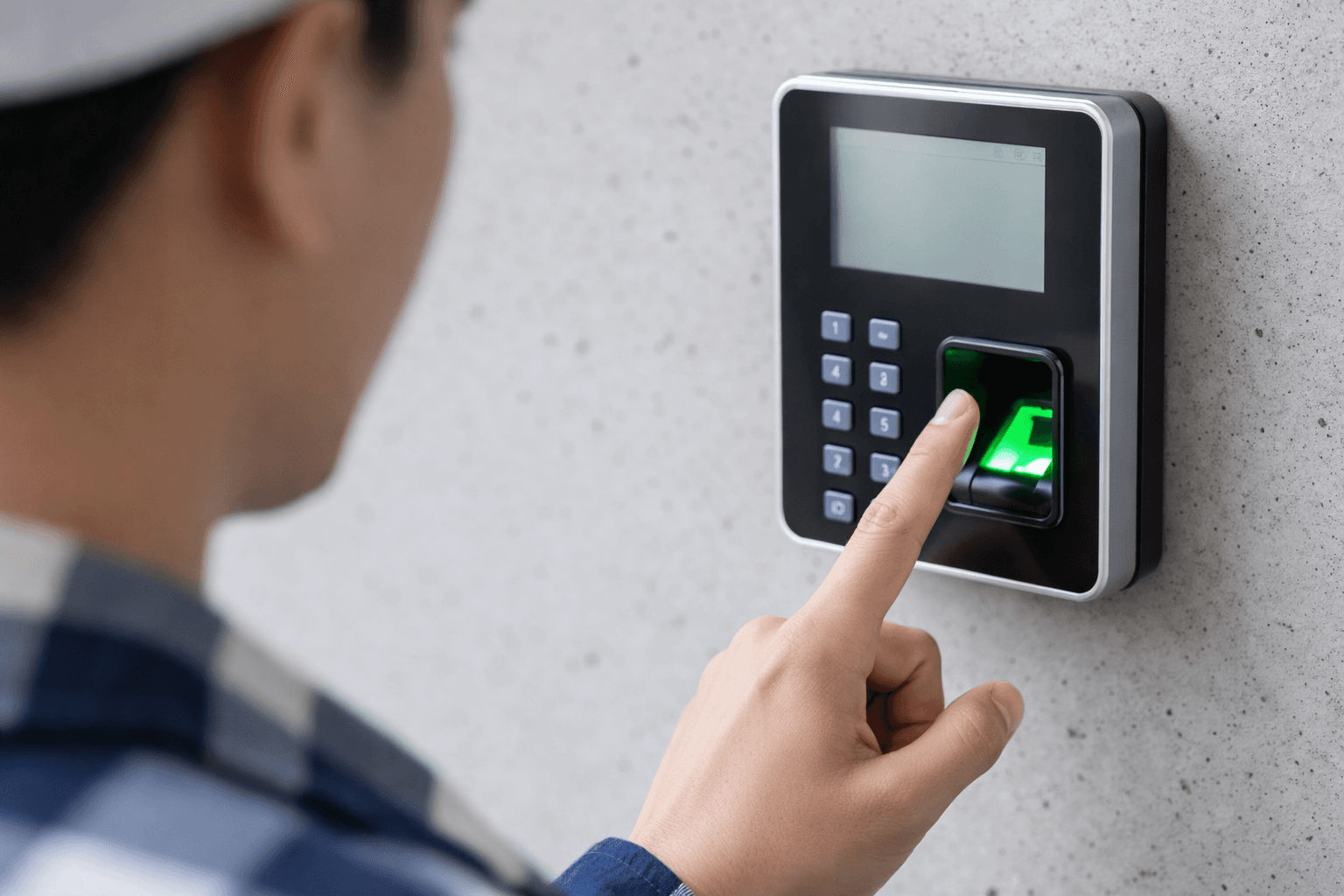
What exactly has to be recorded?
The requirements are more specific than many people think:
- Start of daily working time
- End of daily working time
- Duration of daily working time
- Overtime — i.e. working time that exceeds the regular daily working time (Section 16 (2) ArbZG)
Important: it is not enough to note only the total hours per day. Start and end must be documented so that compliance with rest periods (at least 11 hours under Section 5 ArbZG) and break rules (Section 4 ArbZG) can be verified.
Retention obligation
The records must be kept for at least two years. Check whether your system ensures this.
Electronic, app or paper — which form is allowed?
The BAG decision does not prescribe a specific form. In principle, the following options are possible:
| Method | Allowed? | Recommended? | Practical assessment |
|---|---|---|---|
| Handwritten timesheets | Yes | No | Error-prone, hard to analyze |
| Excel spreadsheet | Yes | Conditionally | Better than paper, no real-time overview |
| Digital time tracking (app) | Yes | Yes | Verifiable, analyzable, more tamper-resistant than paper |
| Stationary terminal | Yes | Yes | Good for fixed locations |
The draft bill from the Federal Ministry of Labour (BMAS) provides that recording should be carried out electronically. The current coalition agreement also provides for rules on electronic time tracking. A draft bill is expected during 2026.
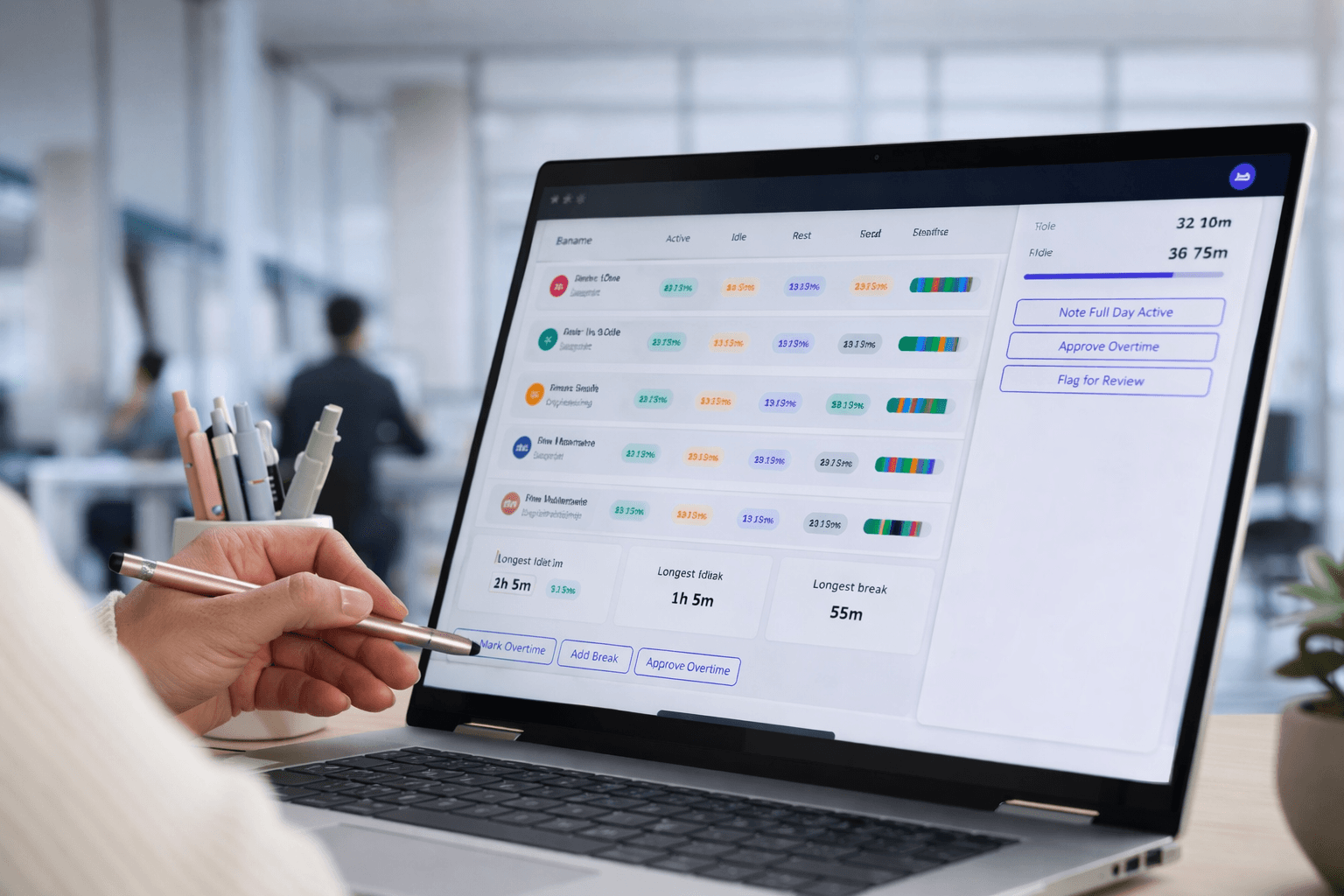
Can recording be delegated to employees?
Yes — and this is also common in practice. The employer remains responsible for ensuring that a system exists and is used. The actual entry of the hours, however, can be delegated to the employees:
- Employees clock in and out themselves via app or timer
- Supervisors review and approve the entries
- An approval workflow applies to manual after-the-fact entries
Important
"I told my employees to write down their hours" is not enough if there is no verifiable system behind it.
Transition periods and exemptions (draft bill)
The BMAS draft bill provides for staggered transition periods based on company size:
| Company size | Transition period |
|---|---|
| More than 250 employees | 1 year after entry into force |
| Up to 250 employees | 2 years after entry into force |
| Up to 50 employees | 5 years after entry into force |
Note
These deadlines refer to electronic recording under the planned law. The general obligation to record working time (in some form) already applies now — regardless of company size.
What happens in case of violations?
The competent supervisory authorities can impose fines of up to EUR 30,000 for violations of the recording obligation (Section 22 ArbZG). On top of that come indirect risks:
- Labour court proceedings: without time tracking, evidence is missing in disputes over overtime. The burden of proof then shifts to the disadvantage of the employer.
- Company audits: customs authorities and social insurance institutions audit regularly — especially in sectors with a high share of Minijobs.
- Liability risk: in the event of workplace accidents, missing time tracking can worsen the liability situation.
Get time tracking right now
Try all features for 14 days — no credit card, cancel monthly.
Checklist: how to implement the time-tracking obligation
Choose a system
Digital time tracking via app, timer or terminal. Look for: start/end/duration recording, break calculation, export.
Clarify responsibilities
Who records? Who reviews? Who approves? Define clear roles.
Inform employees
Explain the system, offer a short onboarding. Acceptance is crucial.
Ensure break recording
The system should automatically calculate breaks under Section 4 ArbZG or prompt for them.
Secure retention
Data must be available for at least 2 years.
Evaluate regularly
Use the data to monitor overtime and the working-time account.
Involve the works council
The introduction is subject to co-determination (Section 87 (1) no. 6 BetrVG).
Time tracking with Shiftdesk
Shiftdesk offers two recording modes that adapt to the working reality of different sectors:
One-click timer
Employees start and stop their working time with a single click. Breaks are calculated automatically under Section 4 ArbZG.
Manual after-the-fact entry
Hours can be entered retroactively — with an approval workflow that involves supervisors.
Both modes document start, end, breaks and net working time. The data can be exported (including as a DATEV-compatible CSV) and is stored for at least two years.
How Shiftdesk specifically supports you with the working-time recording obligation — with automatic notices on rest periods, maximum working hours and breaks under ArbZG right in the schedule — is shown on the corresponding feature page.
Frequently asked questions about the time-tracking obligation
Do Minijobbers also have to record their working time?
Yes. For marginally employed workers in certain sectors (including hospitality, construction and building cleaning), the Minimum Wage Act provides for special recording obligations. The start, end and duration of working time must be documented promptly. You can find the details at the Minijob-Zentrale.
Does the obligation also apply to trust-based working time?
Trust-based working time (Vertrauensarbeitszeit) remains possible as a working-time model — but working time still has to be recorded. The BAG has clarified that trust-based working time does not lift the recording obligation.
What about home office and mobile work?
The obligation applies regardless of where the work is performed. Especially for home office and mobile work, a digital solution makes sense, because stationary terminals are not an option.
From when does the electronic obligation apply?
There is not yet a specific law mandating electronic time tracking (as of April 2026). The 2025 coalition agreement provides for it, and a draft bill is expected during 2026. The general recording obligation (in any form), however, already applies.
Conclusion
The time-tracking obligation is not a thing of the future — it applies today. Anyone who still has no system risks fines, liability disadvantages and burden-of-proof problems — the need to act is urgent. The good news: implementation need be neither expensive nor complicated.
If you want to put time tracking in your business on a solid foundation, take a look at our page on digital time tracking or try Shiftdesk free for 14 days — no credit card required. You can find a detailed comparison in the article Time-tracking software compared.
Do you advise companies on the time-tracking obligation — as a tax advisor, payroll office or consultant? In the Shiftdesk partner program you receive a recurring commission for every successful referral.
This article is for general information only and does not constitute legal advice. The information is based on the BAG decision of 13 September 2022 (case no. 1 ABR 22/21), the ECJ ruling of 14 May 2019 (C-55/18) as well as the German Working Hours Act (ArbZG) and the Occupational Health and Safety Act in their current versions. The information relates to German law. Different rules apply in Austria and Switzerland. For a legal assessment of your specific situation, consult a lawyer specializing in employment law.
The Shiftdesk team writes about scheduling, time tracking and labor law in the DACH region — practical and easy to follow.
Related to this topic
Take the next step with the relevant Shiftdesk solution or a free tool.
More articles

How to Compare Time Tracking Tools: A 10-Point Checklist for SMEs
Compare time tracking tools against your workflow: 10 criteria, concrete pilot cases and checks from clocking in to payroll handoff.

Managing a working-time account: overtime, negative hours and target/actual time
How to keep a working-time account properly — with target-actual comparison, overtime rules, negative-hours handling and practical tips for getting started.
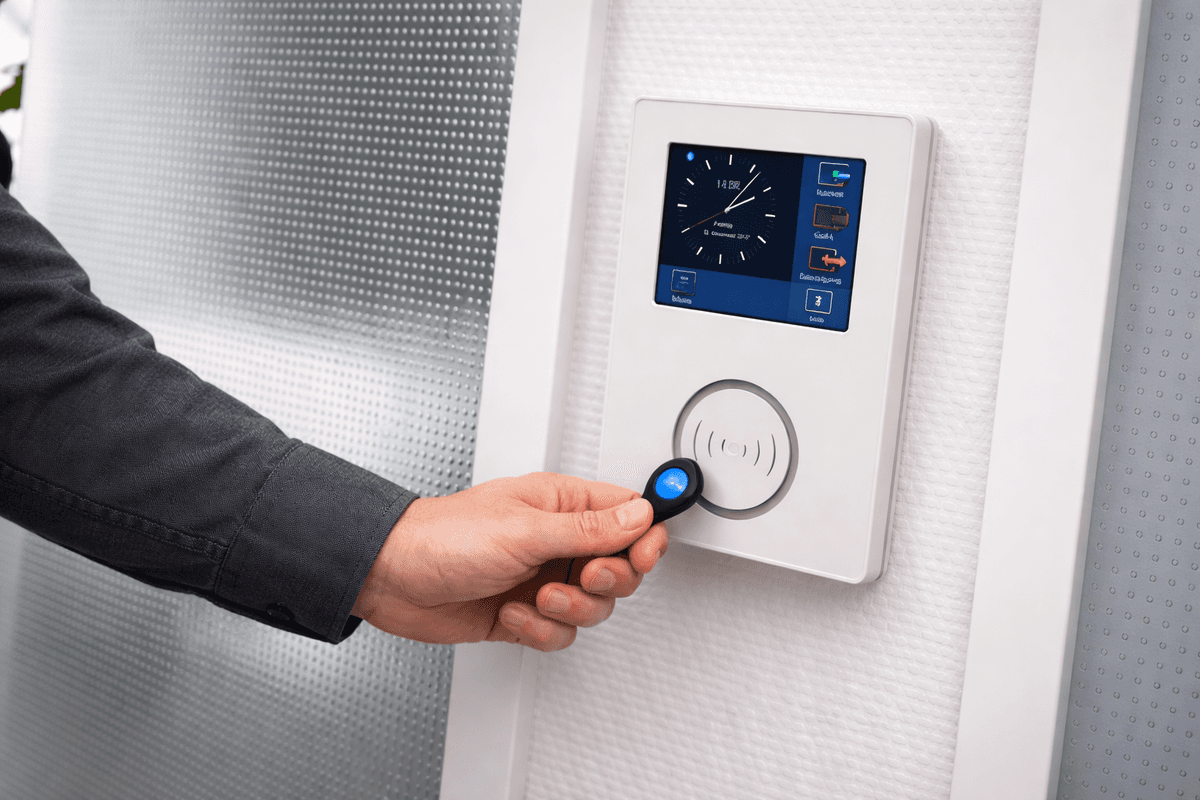
Digital Time Clock: Everything Companies Need to Know in 2026
App, browser or shared tablet? Three business examples, prerequisites and current plan limits help you choose a digital time clock.